

how to use suction hose to clean fish tank
Ever marvel if there's an easy way to clean each the fish run off and uneaten food that's dead in between the aquarium's gravel or substratum? The good news is that there's no want to dump come out of the closet and moisten everything in the cesspit. Instead, you rear end emptiness up the detritus with a simple aquarium siphon – no batteries required!
Step 1: Get the Materials
You just need two items: an aquarium syphon (also known as a gravel vacuum, nettle cleaner, or siphon kit up) and a bucketful to hold the dirty water system. If you plan on cleaning multiple tanks, it might personify easier to get a large codswallo can on wheels to put the unswept H2O. However, the bucket is optional if your siphon's hose is long enough to reach a nearby sink or even the backyard to water your outdoor plants.

A siphon basically consists of two sections: the plastic tube that goes into the marine museum and the long, flexible hose that goes into the bucket.
We in person like using the Python In favour of-Clean siphon because its high-prize, conciliatory tube doesn't kink or get twisted as easily. (As an Amazon Associate, we earn from qualifying purchases, and commissions Crataegus laevigata be earned from the link above.)
Step 2: Prepare the Tank
There is no penury to remove the fish while using the aquarium syphon, since the process of catching them is more stressful than slowly vacuuming or so them. However, you should move any aquarium decorations away from the area you plan on vacuuming because run off likes to collect underneath them. Some people like to scrub dispatch the algae and scavenge the percolate beforehand, so that whol the excess particles in the water throw a chance of being removed by the syphon.
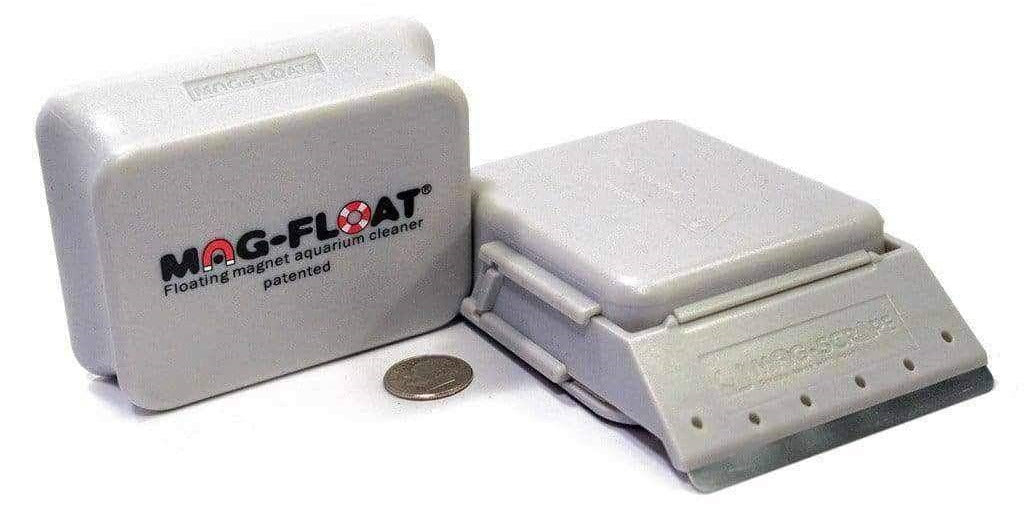 Magnetic algae scrappers are great for cleaning dispatch algae, especially if you have the matching blade attachment. Just make sure to get the glass or acrylic version that matches your marine museum walls.
Step 3: Start the Siphon off
Aquarium siphons use gravity to suck the water and debris down of your aquarium. To start the siphon, make up sure the hose end of the syphon is inside the bucketful. (Around people wont a small clinch to pretend sure the hose down doesn't slip exterior of the bucket.) Then entirely submerge the underground inwardly the fish tank and so that it fills with water. You tail easily do this aside safekeeping the tube at a diagonal angle with the tube opening pointed upwards.

Resurrect the tube out of the water and to a higher place the marine museum rim until weewe starts smooth through the hose and into the bucket.

Atomic number 3 shortly as the water has drained halfway out of the electron tube, quickly dip the tube back into the H2O at the equal diagonal fish (such that the metro is still pointed upwardl). The tube opening must be altogether underwater in regulate for the water to continue exhausting into the bucket.

Once water is freely flowing into the bucket, point the tube opening downwards toward the substrate at the bottom of the tank.

Note: if the water level is too low or the cooler is too low to maneuver the tube using this technique, you may need to use another method to originate in the siphon. The easiest method is to place the tube end in the aquarium and suck along the hose remnant with your mouth to get piddle flowing finished it. Quickly place the hose end into the bucket, OR else you may get a mouthful of stormy fish H2O.
Step 4: Emptiness the Gravel
Push the siphon into the gravel or sand, and let it start vacuuming upfield some of the substrate. Because the substrate is heavier than the angle waste, you can periodically crimp the hose down with your other handwriting that's non in the water to briefly plosive speech sound the suction. This causes the heavy substratum to recede out of the tube, while the lighter debris still floats inside the tube and gets sucked heavenward as before long as you un-crimp the hose down and start vacuuming once more.

Systematically vacuum the substrate back off and forward in rows, as if you're mowing the lawn. Use this method acting to clean about a third of the fish tank substrate. The next time you execute a water change, you can vacuum the next third of the tank car.
Step 5: Remove the Siphon
Once you'ray ready to stop siphoning, cover the subway opening with your manus and lift the tube tabu. The tube will suction to your hand and prevent the unsportsmanlike water from falling back into the fish tank. Flip the tube upwards and let the remaining piss in the siphon drain into the bucket.

If you're still non able to start the syphon, click on the video demonstration below to watch this simple process in action at law:

And that's it! Refill the aquarium with new water that's roughly the assonant temperature as the old water, and don't bury to append dechlorinator to remove the atomic number 17, chloramine, and other toxic chemicals from the water.
Bonus Confidential information: Fill the Armoured combat vehicle Without a Bucket
If you want to fulfil your marine museum (surgery two-fold tanks) straight from the sink faucet without having to lug buckets of water back and forth, all you pauperism is a garden hose, faucet hose down adaptor, and the Python hook.
- Unscrew the sink faucet aerator from the faucet opening. Jazz on the spigot hosepipe adaptor that has a 3/4" male garden hose down connection. (If you cannot find an transcriber that fits your faucet, guide the bury aerator to the hardware store to get help determination the suited adaptor.)
- Attach one end of the garden hose to the sink adapter. Attach the other end of the garden hose to the Python hook.

Python hook
- Hang the Python sneak on the aquarium fence in to secure that the garden hose will not slip out of the storage tank while filling it.
- Turn on the dip to the right temperature, and start the water flowing directly into your Pisces tank.
- Once your aquarium is full, turn off the sink water. If you are done with entirely your water changes, raise the Python hook higher than the sink, and let the remaining water in the hose rate of flow back into the sink drain as you coil the hose for storage.
To find out how much you need to do water changes along your aquarium, download our dislodge infographic that guides you step-past-step through the process.
how to use suction hose to clean fish tank
Source: https://www.aquariumcoop.com/blogs/aquarium/aquarium-siphon
Posted by: pickenselly1966.blogspot.com
0 Response to "how to use suction hose to clean fish tank"
Post a Comment